

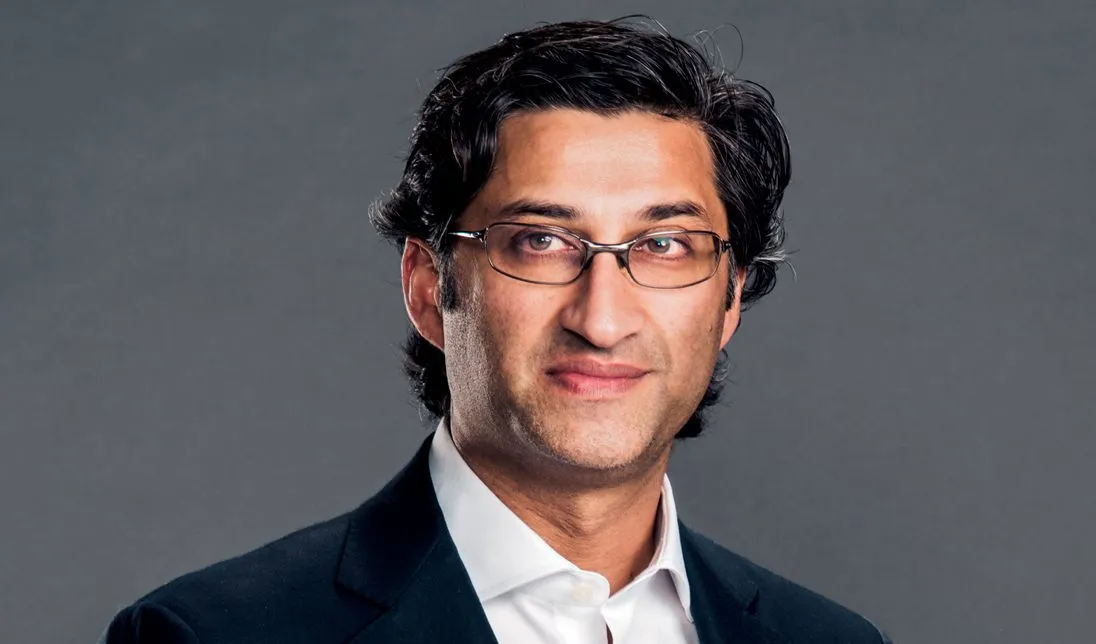
The career of Asif Kapadia has often centered on individuals caught in systems beyond their control. In 2073, however, the focus shifts from personal biographies to global mechanisms of domination. The film critiques the increasing normalization of surveillance, authoritarianism, and social isolation, using cinematic tools to illustrate how these forces may shape our collective future. While rooted in documentary tradition, 2073 expands Kapadia’s practice into speculative storytelling, revealing how real-world technologies and policies could evolve into dystopian control systems.
Kapadia’s personal experiences played a pivotal role in shaping his outlook. During the early 2000s, he was placed on a U.S. watch list for photographing cityscapes in New York, an incident that made him viscerally aware of the reach of government scrutiny. This first-hand brush with institutional suspicion later found thematic echoes in 2073, where the protagonist Ghost lives in a state of perpetual evasion, hiding from drones, cameras, and data-collecting forces. The character’s silent resistance becomes a mirror for citizens who increasingly sense that privacy and autonomy are eroding in real time.
The film’s depiction of surveillance is not limited to fiction. It incorporates footage of real-world protests, biometric data collection, and AI-driven law enforcement tactics, drawing attention to the continuity between today’s headlines and tomorrow’s possibilities. In interviews, Kapadia has pointed to the everyday normalization of facial recognition and digital profiling as warning signs. The film is structured around these cues, showing not an abstract future but an accelerated present, where total visibility is equated with safety and obedience. The result is a work that compresses time, blurring the boundary between speculative cinema and social commentary.
In creating 2073, Kapadia employed LED-stage technology to simulate abandoned urban landscapes, allowing him to film scenarios of collapse while embedding actual documentary footage into the design. These sequences are populated with real images from places such as Hong Kong, New Delhi, and São Paulo, where protests and surveillance regimes co-exist. The narrative becomes a palimpsest—each layer contributing to a sense of decay and repetition. Ghost walks through these scenes as both observer and target, her silent monologue offering a glimpse into the emotional cost of living in a world that watches but never listens.
Kapadia’s casting of Samantha Morton as Ghost adds emotional depth to the theme of enforced isolation. Morton’s character has stopped speaking and lives underground in a defunct shopping mall. Her only dialogue is internal, creating a sense of claustrophobia and mental fragmentation. Through this character, Kapadia explores how constant observation leads not only to behavioral modification but also to psychological withdrawal. The film’s sound design enhances this theme, layering electronic echoes and distant alarms over Ghost’s voice, which drifts like a memory across a ruined cityscape.
Beyond its technical execution, 2073 raises ethical and philosophical questions about complicity and resistance. The film does not present clear solutions or hopeful conclusions. Instead, it reflects Kapadia’s view that contemporary media saturation may numb rather than mobilize. In one post-screening conversation, he suggested that logging off social media might be a start—but didn’t offer much more. This ambiguity reflects the larger dilemma: in a system that monetizes attention and regulates dissent, resistance can feel futile. Yet the film’s very existence stands as a form of protest, calling on viewers to remain alert and critical.
Kapadia’s earlier documentaries focused on singular lives—Senna, Winehouse, Maradona—but 2073 shifts attention toward structural patterns. Surveillance, inequality, and ecological collapse are not portrayed as distant threats but as current conditions. This repositioning signals a broader ambition: to move from biography to global systems analysis. By using his filmmaking platform to question power structures rather than just profile personalities, Kapadia expands the role of the documentarian into that of cultural diagnostician.
In this new phase, Asif Kapadia is not just chronicling stories—he is tracing systems. 2073 does not provide comfort or clarity, but it does offer perspective. And in a world where the lines between observer and observed grow increasingly faint, that perspective may be its most vital contribution.
